

Price optimization software has split into camps that solve different problems. Some tools track competitors and reprice against them. Some model demand with AI. Some serve enterprise B2B. Almost all of them stop at the competitive price — and leave your discount campaigns in a spreadsheet on the side. This guide compares seven of the strongest options for 2026 by who each one is actually built for, so you can match the tool to how your team really prices.
The phrase "price optimization software" now covers tools that barely overlap.
A competitor-tracking tool for a small Shopify store and an AI demand-modelling platform for an enterprise retailer are both sold under the same label, and they solve almost nothing in common.
So the useful question isn't "which is best" — it's "best for whom." The wrong tool for your model is an expensive mistake regardless of how good it is for someone else's.
We'll say upfront that Reprice is our product, and we've placed it first, but for one specific kind of team, and we'll be precise about which.
Every other tool here is genuinely good at what it does, and for many businesses one of them is the right answer.
The honest way to read this list is by the "best for" line, not the rank number.
Here's the shortlist, then the details on each.
Competitive pricing, discount campaigns and insights in one system.
Before the detail, here's how the seven compare on the one axis that separates them most: who they're built for, and whether they handle discount campaigns or only the everyday competitive price.
The pattern is the story: six of the seven optimize the competitive price. One runs competitive pricing and discount campaigns from the same product data.
That's the distinction the rest of this guide turns on.
We build pricing software, so we're not a neutral reviewer, and pretending otherwise would be the fastest way to lose your trust.
What we can offer instead is that we live in this category every day: we know what these tools do because we compete with them, integrate around them, and hear from the retailers who switched between them.
That's also why the framing here is by category, not by a rigged score.
The three-way split below is the real shape of the market — and it's why "best" depends entirely on which job you're trying to do.
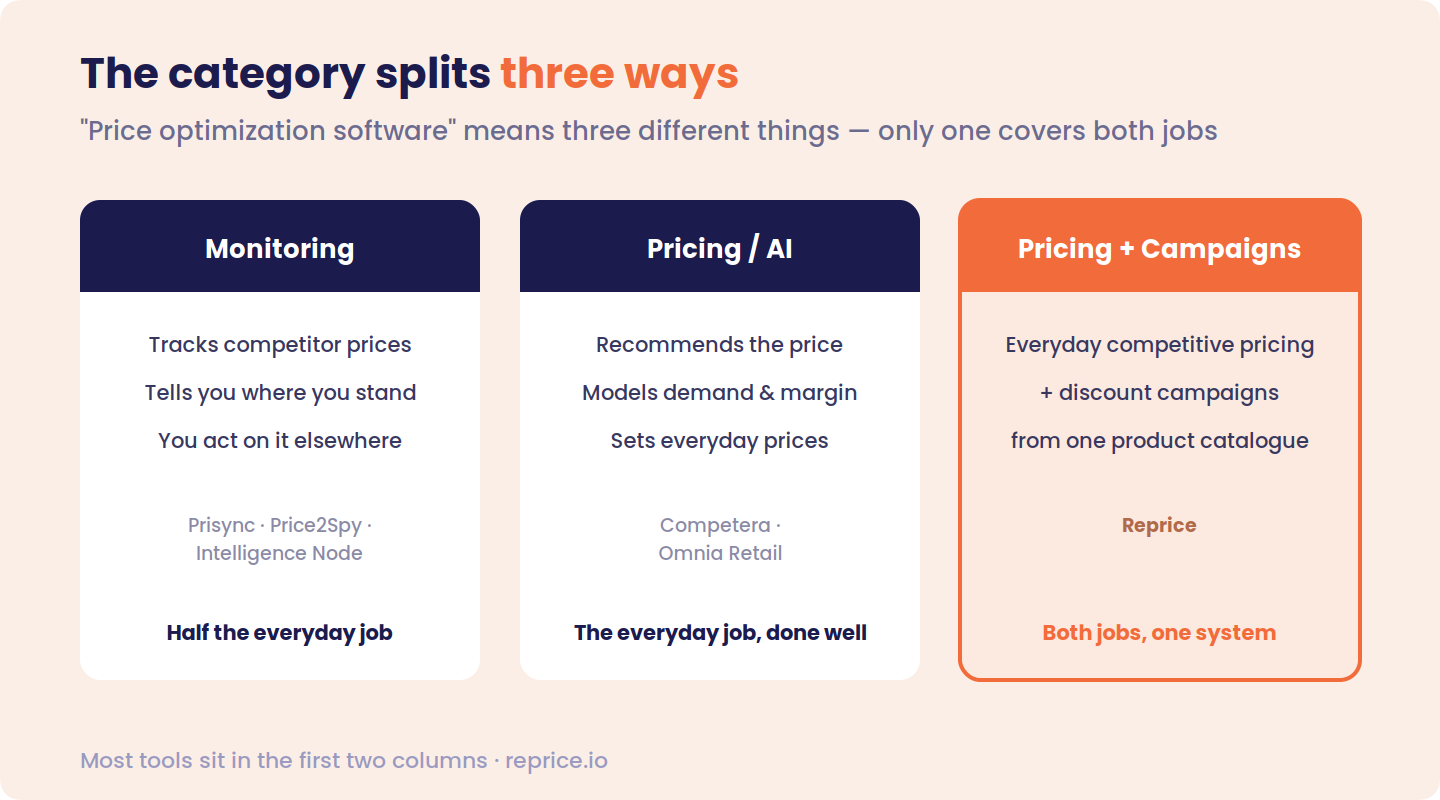
The retailers who feel the third column most are the ones who tried to cover both jobs with a tool built for one:
That gap — great at pricing, no control of campaigns — is the throughline of this whole list.
Here's each tool in order, with what it's genuinely best at and who should look elsewhere.
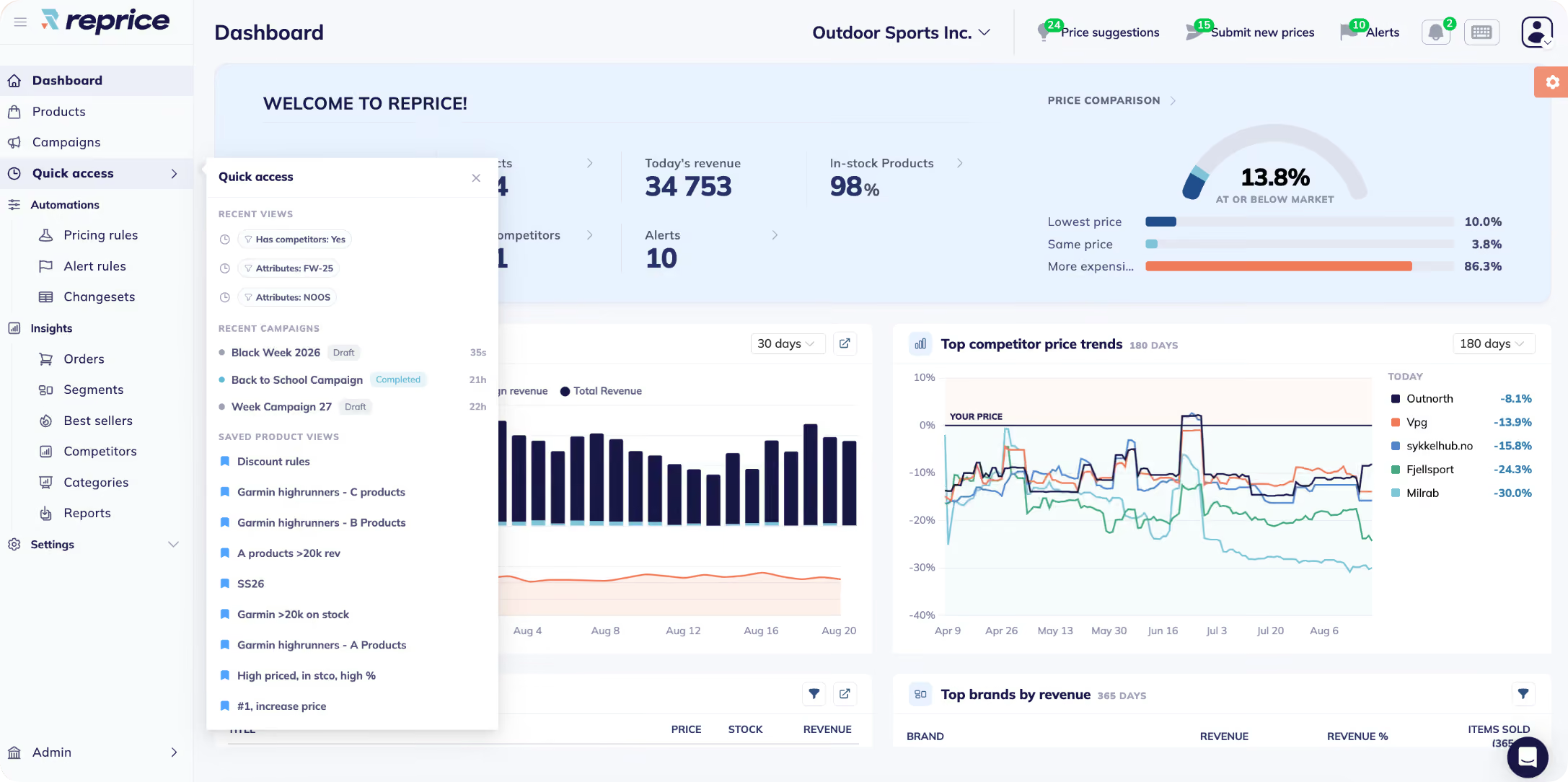
Reprice is built for one kind of team: e-commerce retailers in high-competition verticals — outdoor, sport, fashion, cosmetics, pharmacy, electronics — managing thousands of SKUs and running frequent discount campaigns.
For that team, it's first on this list.
For others, it may not be, and that's the point of a scoped recommendation.
What makes it different is that it's the only tool here that treats competitive pricing and discount campaigns as one job on one product catalogue.
Everyday pricing follows your rules across the whole assortment; campaigns are planned in the same system, protected from those daily rules while they run, checked against the 30-day rule before launch, and reverted automatically when they end — all bound by pricing rules that protect your margin.
Competitor position, stock, margin and campaign status sit together for every product.
The trade-off is scope.
Reprice isn't a B2B pricing engine or a demand-elasticity modeller, and it isn't aimed at businesses that never run promotions.
If your pricing is purely competitor-matching with no campaign side, a monitoring tool below may be a leaner fit.
But if you run both motions — and most high-competition B2C retailers do — running them in two disconnected tools is where margin and time leak out.
Best for: high-competition B2C e-commerce teams running frequent campaigns.
Not for: pure B2B tender pricing or businesses that never discount.
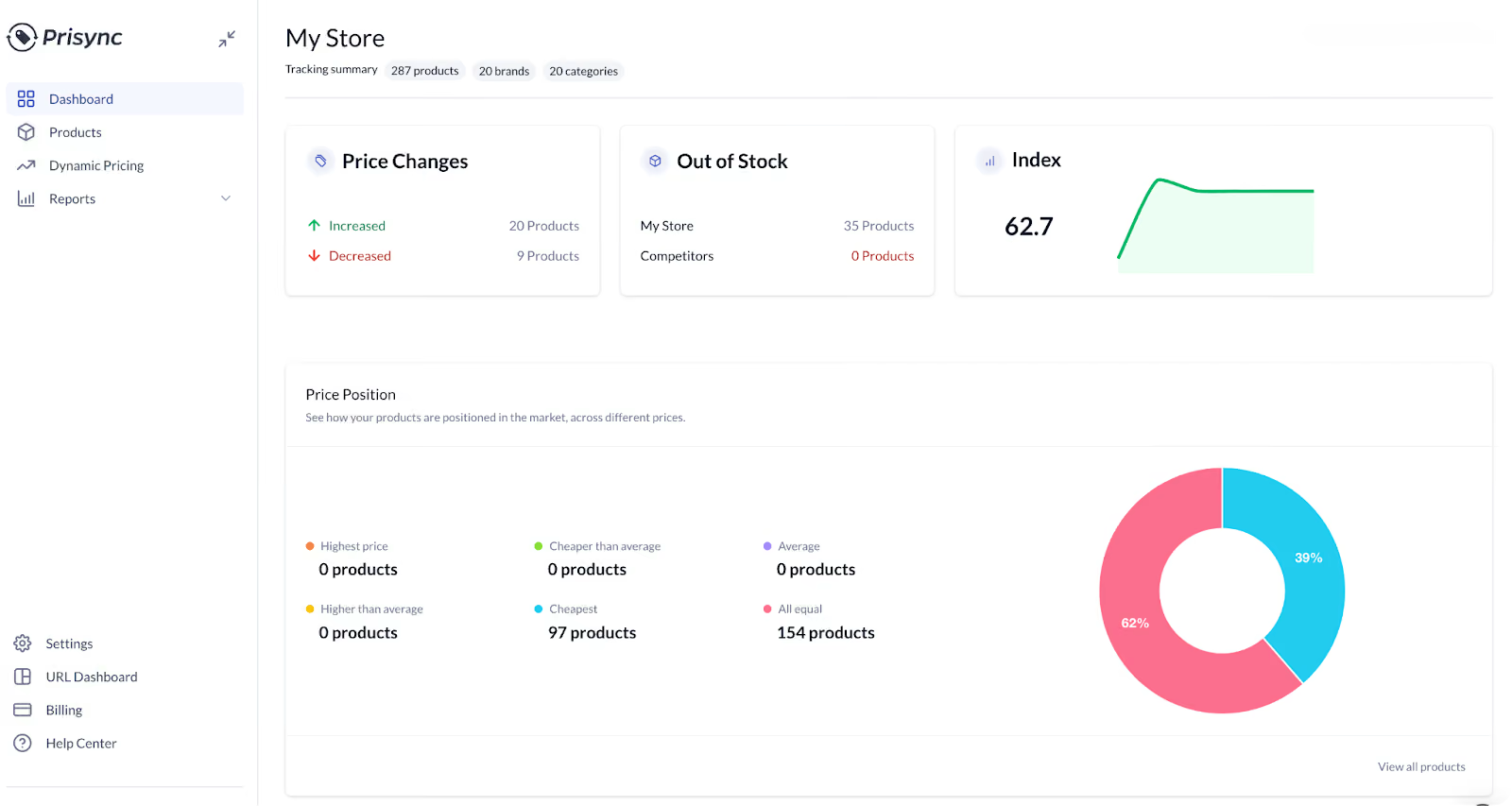
Prisync is a clean, accessible competitor price tracking and repricing tool aimed at small and mid-size e-commerce sellers.
It monitors competitor prices, applies repricing rules, and does it without the complexity or cost of an enterprise platform.
For a smaller catalogue where the core need is "know where I stand against rivals and adjust," it's a strong, straightforward choice.
Its focus is competitive pricing — monitoring and repricing — rather than campaign management. Teams that mostly need competitor visibility and simple rules will find it does exactly that well.
Best for: SMEs that need competitor tracking and repricing without enterprise overhead.
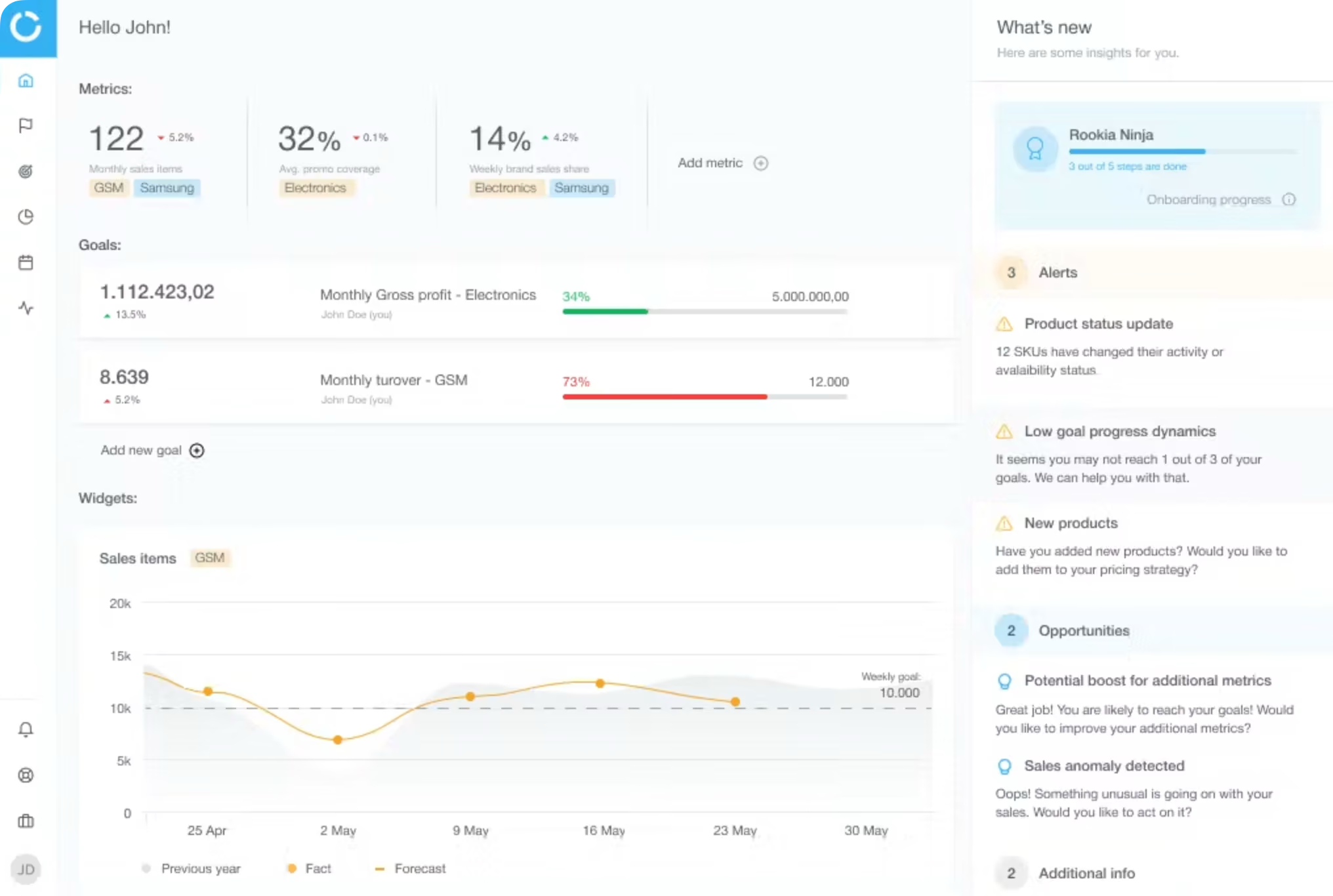
Competera brings machine-learning dynamic pricing to mid-market and larger retailers.
It goes beyond matching competitors, modelling demand and elasticity to recommend prices that balance volume and margin, and it suits teams with the data maturity and catalogue scale to feed an AI pricing engine.
It's a pricing-optimization platform in the fullest sense — its strength is the sophistication of the price recommendation, not running promotional campaigns end to end.
Best for: mid-market and larger retailers wanting AI-driven demand-based pricing.
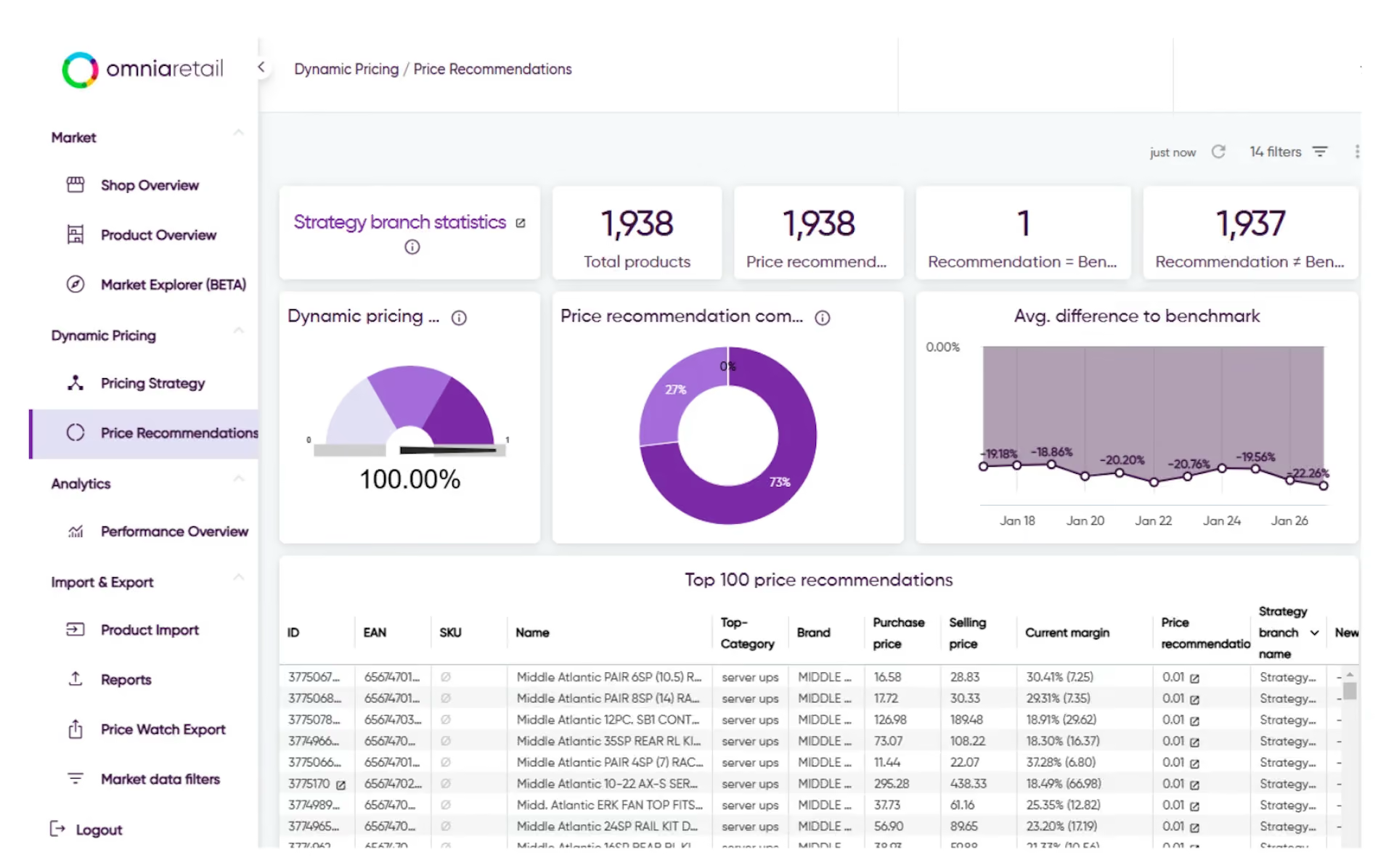
Omnia Retail is a dynamic pricing platform built for retailers operating across multiple channels, combining competitor data, rules and pricing strategies at scale.
It's well suited to established retailers who need consistent, automated pricing across online and offline, with the flexibility to encode fairly complex pricing logic.
Like the others in this tier, its centre of gravity is the pricing decision itself rather than discount-campaign management.
Best for: omnichannel retailers needing automated pricing across channels.
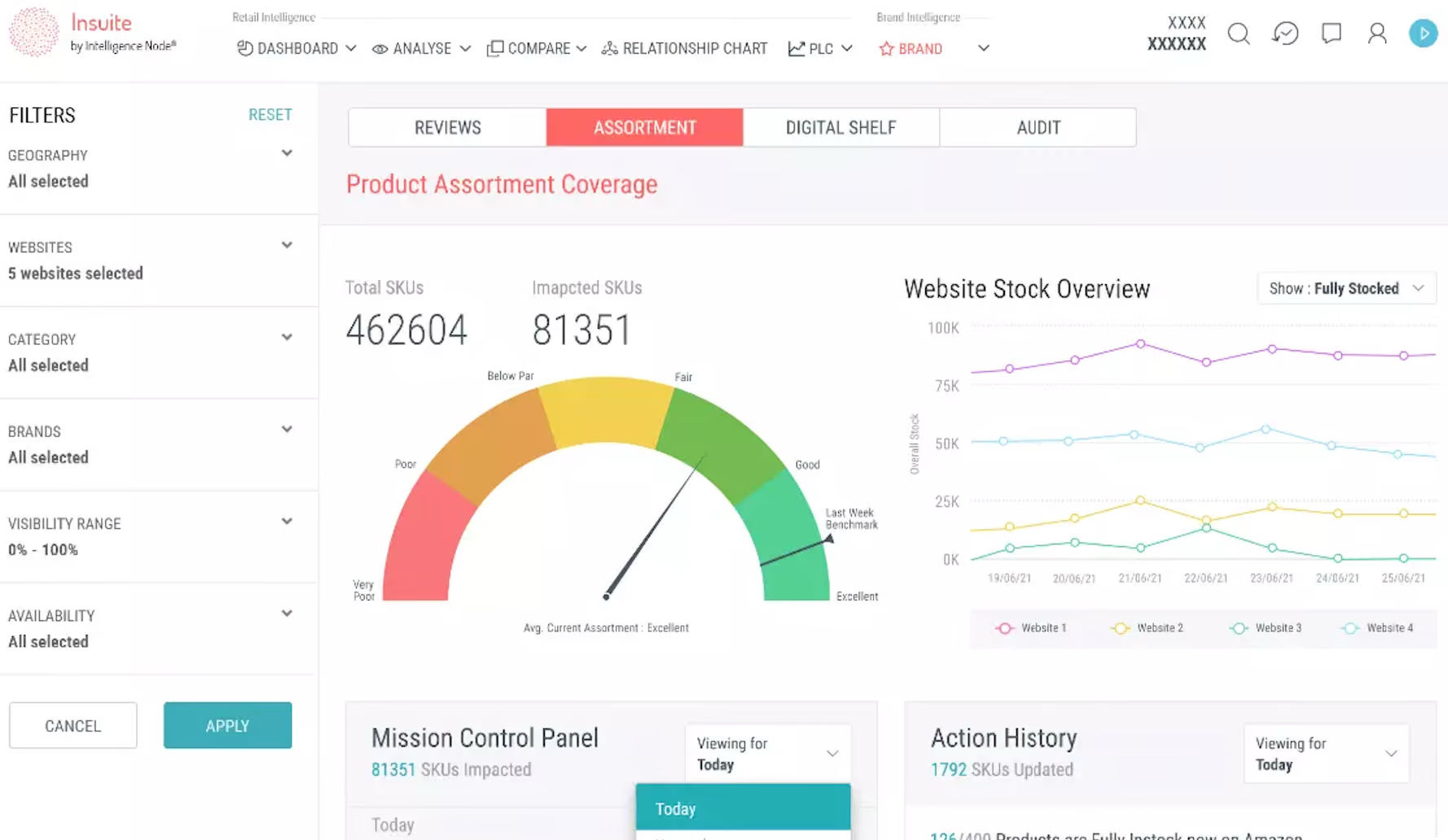
Intelligence Node is a retail analytics and competitive intelligence platform used by large enterprises for deep competitor and market benchmarking across huge catalogues.
Its strength is breadth and accuracy of market data — assortment, price, and product matching at enterprise scale.
It's more of an intelligence and benchmarking layer than an execution tool, often sitting alongside other systems that action the prices.
Best for: enterprises needing large-scale competitors and market benchmarking.
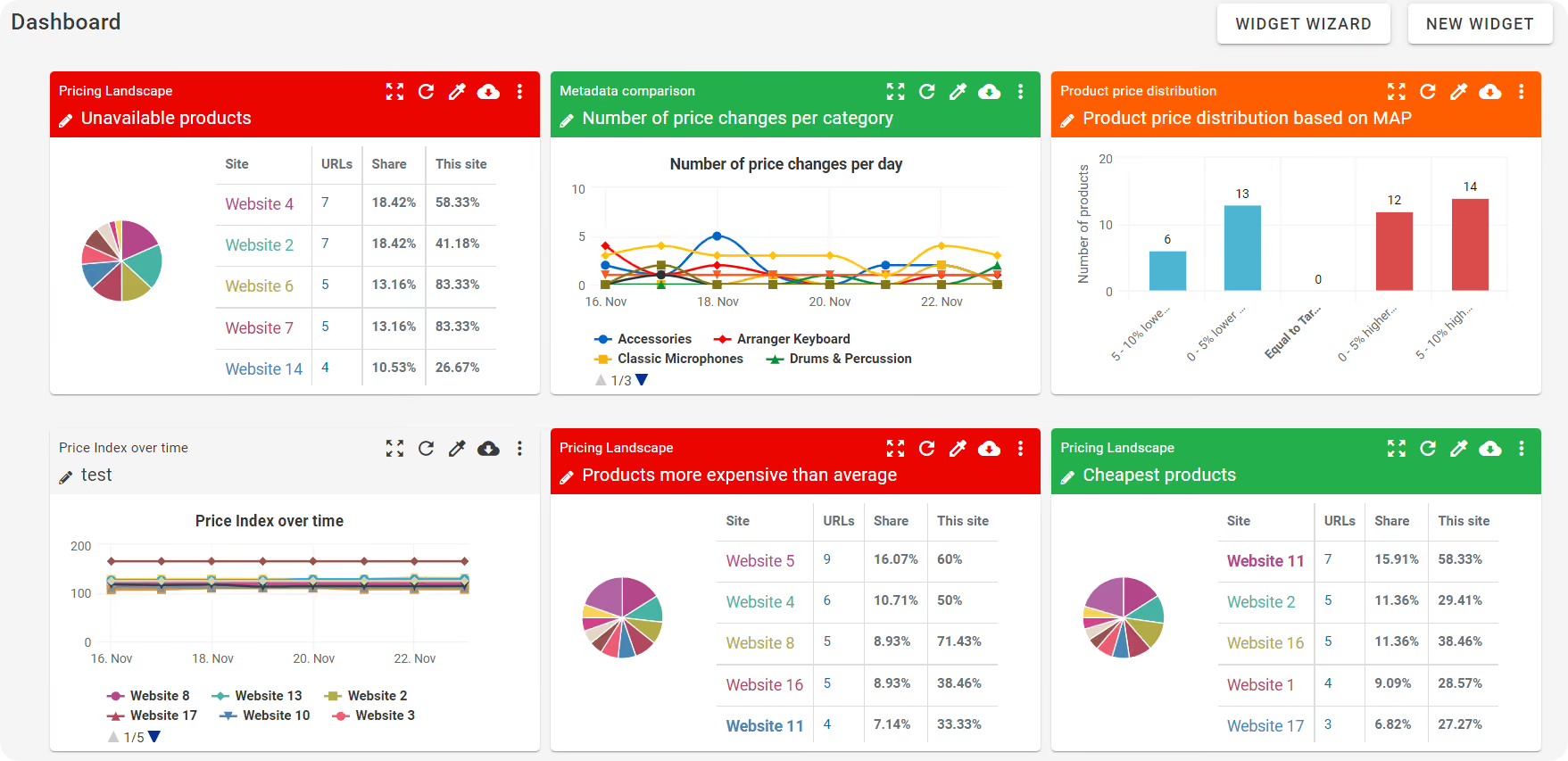
Price2Spy is a long-established competitor price monitoring and repricing tool, known for tracking prices reliably even on complex sites with bot protection, across many languages and currencies.
It's flexible on custom repricing rules and works for businesses of most sizes that need dependable competitor data.
Its remit is monitoring and repricing — the competitive-price half of the problem — rather than campaigns.
Best for: teams that need robust, reliable competitor monitoring across tricky sites.
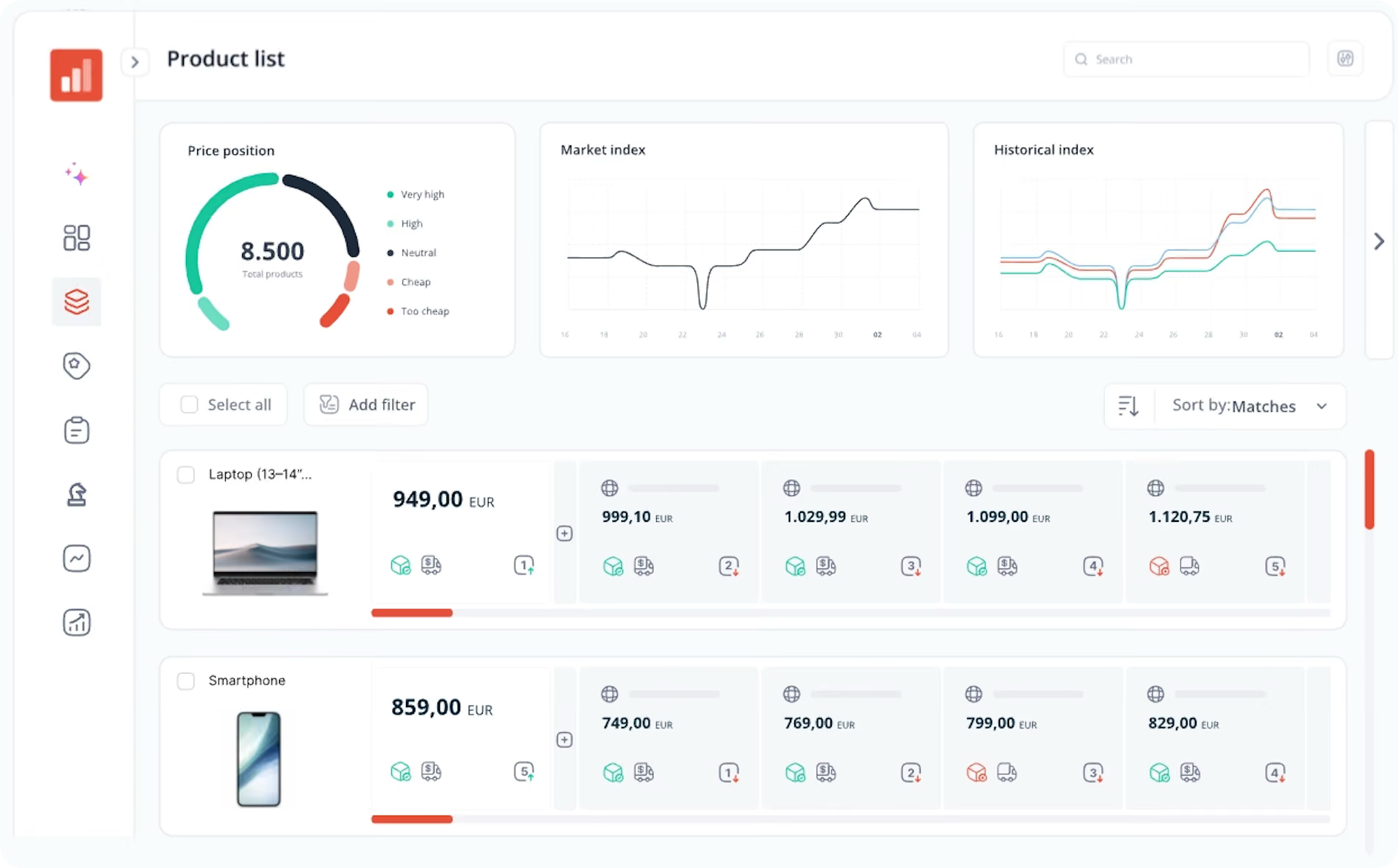
PriceShape is a competitor monitoring and repricing platform popular with Nordic and European retailers, strong on price tracking and automated repricing rules
It can layer discount logic on top of monitoring, which puts it a step beyond pure tracking tools.
Where it stops is full campaign management — planning, protecting and reporting on promotions from the same product data. We covered that distinction in detail in our Reprice vs PriceShape comparison.
Best for: retailers wanting competitor monitoring with solid repricing.
Match the tool to your pricing shape, not the rank.
If you only need competitor visibility, Prisync or Price2Spy will serve a smaller catalogue and Intelligence Node an enterprise one.
If you want AI demand modelling, Competera or Omnia Retail lead there.
If you're an enterprise B2B business, the heavyweight platforms outside this list — Pricefx, Vendavo, Zilliant — are built for you.
But if you're a high-competition B2C retailer running everyday competitive pricing and frequent discount campaigns, the split most of these tools force — pricing in one system, campaigns in a spreadsheet — is the actual problem to solve.
That's the gap Reprice was built for, and why, for that team, it's first.
The research behind how European e-commerce really prices its biggest campaigns is what convinced us the gap was worth building around.
Competitive pricing, discount campaigns and insights in one system.
Tool positioning reflects each vendor's publicly stated focus as of 2026; verify current features before deciding. Pricing behaviour data: The Black Friday Freeze, a survey of 180 European e-commerce companies.