

Pricing has long been a competitive strength for Get Inspired, helping the company build a strong position in Norwegian e-commerce.
As the assortment and competitive pressure grew, the challenge was applying that pricing strategy across thousands of products. Competitor prices, product performance and campaign planning all influenced the decision, but they were not yet brought together in one pricing workflow.
Today, Reprice brings competitor insight, pricing history, sales, stock and campaign planning together in one system. Approved campaign prices also flow directly into Get Inspired’s ERP.

Get Inspired has long competed strongly on price.
Business Analyst Caroline Tønder describes being good on price as one of the main reasons customers have chosen Get Inspired over the years.
As the company expanded into new categories and added more brands, the market became more competitive and pricing became more aggressive.
That made a strong pricing strategy even more important.
Get Inspired wanted to keep building on a strength that was already central to how it competed.
As the assortment grew, applying that pricing strategy across thousands of products became more complex.
A competitor price alone does not tell the team what to do. For each product, the team also needs to understand:
Different products call for different responses.
One may need a more competitive price. Another may have room to hold its price. A third may make more sense as part of a campaign.
Get Inspired wanted more context behind those decisions across the assortment.
Get Inspired started using Reprice for competitor price monitoring.
When Reprice began exploring campaign management, the two companies saw an opportunity to bring more of Get Inspired’s pricing work into the same system.
Get Inspired already had a clear view of how it wanted campaigns to work.
The team shared its requirements with Reprice and became a pilot customer for the Campaign Manager, helping shape it around the needs of a large retail assortment.
Bringing campaign planning into Reprice meant competitor information, product performance, campaign planning and price execution could work from the same product data instead of being handled as separate parts of the pricing process.
Every single part of the campaign planning has gotten a lot better. Everything is an improvement from the old system.
— Caroline Tønder, Business Analyst, Get Inspired
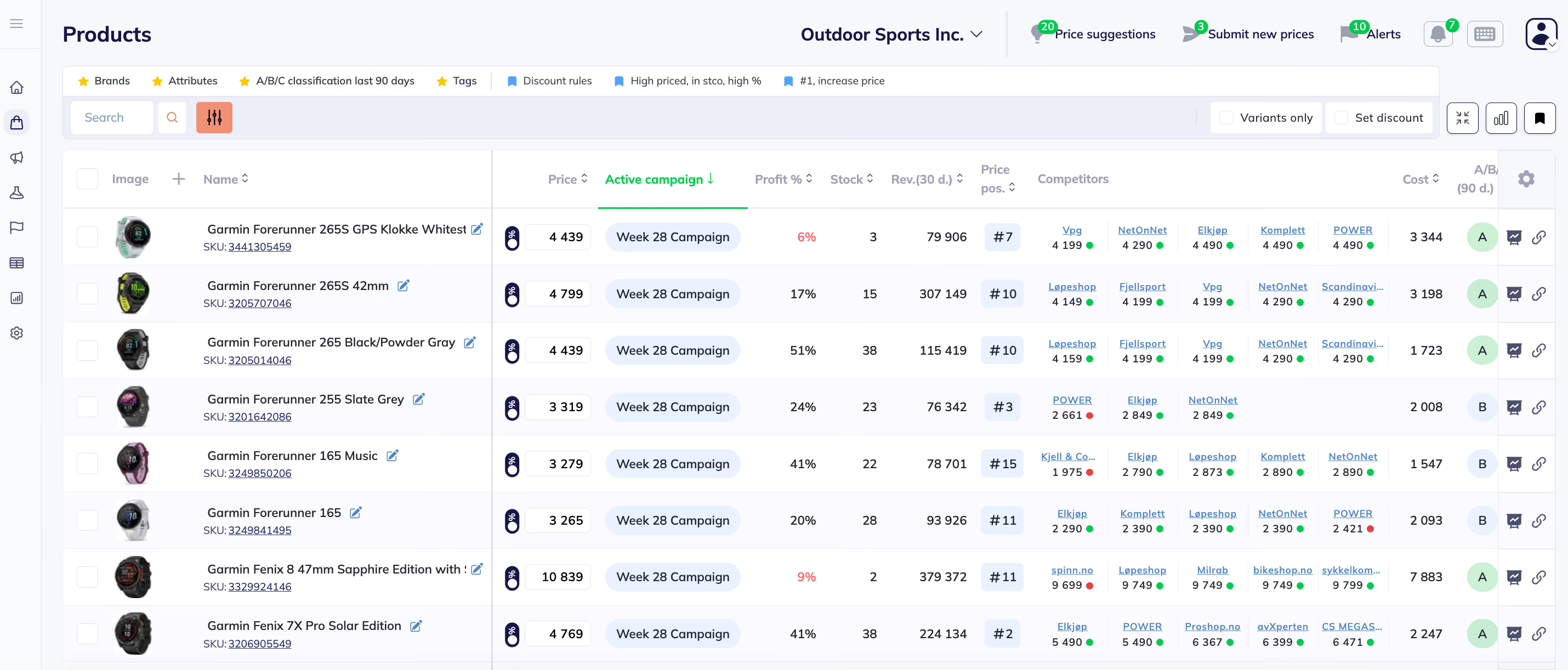
With both workflows in Reprice, Get Inspired can use the same product view for competitor analysis and campaign planning.
For every product, the team can review:
For competitive pricing, pricing history adds context to what is happening in the market.
Instead of looking only at a competitor’s current price, the team can see whether that competitor has consistently priced below Get Inspired or whether the change is temporary.
When planning a campaign, the team can use the same information to filter the assortment, review the products it wants to work with and decide which products to include and what action makes sense.
Once campaign prices are approved, they move directly from Reprice into the ERP.
The prices are exported directly from Reprice, which is really good.
— Caroline Tønder, Business Analyst, Get Inspired
While a campaign is running, Get Inspired can follow revenue, units sold and stock value. A shared campaign calendar gives the team an overview of campaign activity and performance in the same system.
Get Inspired already had a strong pricing strategy. Reprice gives the team more context for applying it across a larger assortment and a more competitive market.
Competitor position and pricing history can be viewed alongside Get Inspired’s own sales, stock and product data.
Competitor insight and campaign planning work from the same product information.
The team can use competitor positioning, pricing history, sales and stock when deciding which products to include and what actions make sense.
Approved campaign prices move directly from Reprice into the ERP.
Revenue, units sold and stock value can be followed while a campaign is running.

I would recommend Reprice 100%. It gives us a lot of good insights. I almost don’t want others to use it, because I don’t want them to get the same insight as us.
— Caroline Tønder, Business Analyst, Get Inspired
about

industry
business model
market
products
previous setup
Strengthen your pricing strategy with a clearer view of the market
Book a 30-minute walkthrough to see how Reprice brings competitor insight, campaign planning and price execution into one system.