

E-commerce teams plan Black Friday for months, then leave their prices frozen during the one week that decides the year.
New data from 180 European companies shows a third never change a price all week, most run into a wall when they try, and 80% admit to a discount practice a regulator would question.
The preparation is real. The execution stops the moment the week begins.
We asked 180 European e-commerce companies how they run pricing during their biggest sales week. Most start three months out, lock their discounts weeks ahead, and check competitors before they launch.
Then when Black Friday arrives, competitors start moving, and a third of these companies change nothing. Not one price, all week. Two thirds change prices at most twice.
That's the Black Friday Freeze.
Here's what the data shows, and why it happens to teams that clearly know what they're doing.
We surveyed 180 European e-commerce companies to find out how they plan, run and adjust Black Friday pricing
Nobody sleepwalks into Black Friday:
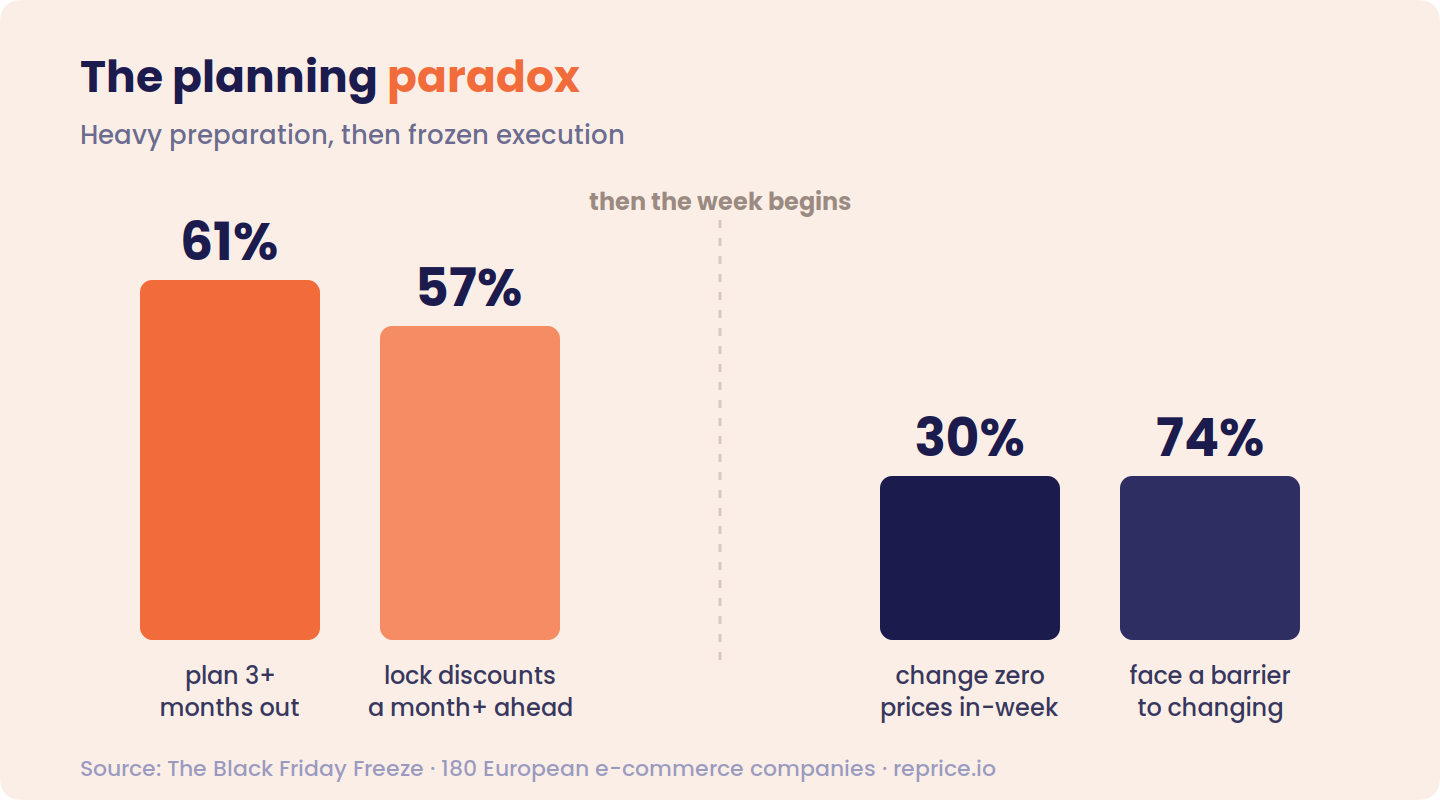
Then they lock the campaign.
57% fix their discounts a month or more before launch, which means the biggest pricing decisions of the year get made when the information is oldest. Weeks before anyone knows what competitors will do, what stock will actually move, or where the market lands.
A discount list locked in October is a bet on November, and most teams never get to change the bet.
Black Friday week is when competitors move most and every price carries the highest stakes.
It's also when the pricing work stops. 30% of companies change nothing all week. Another 37% change prices once or twice. Only 13% adjust more than once a day.
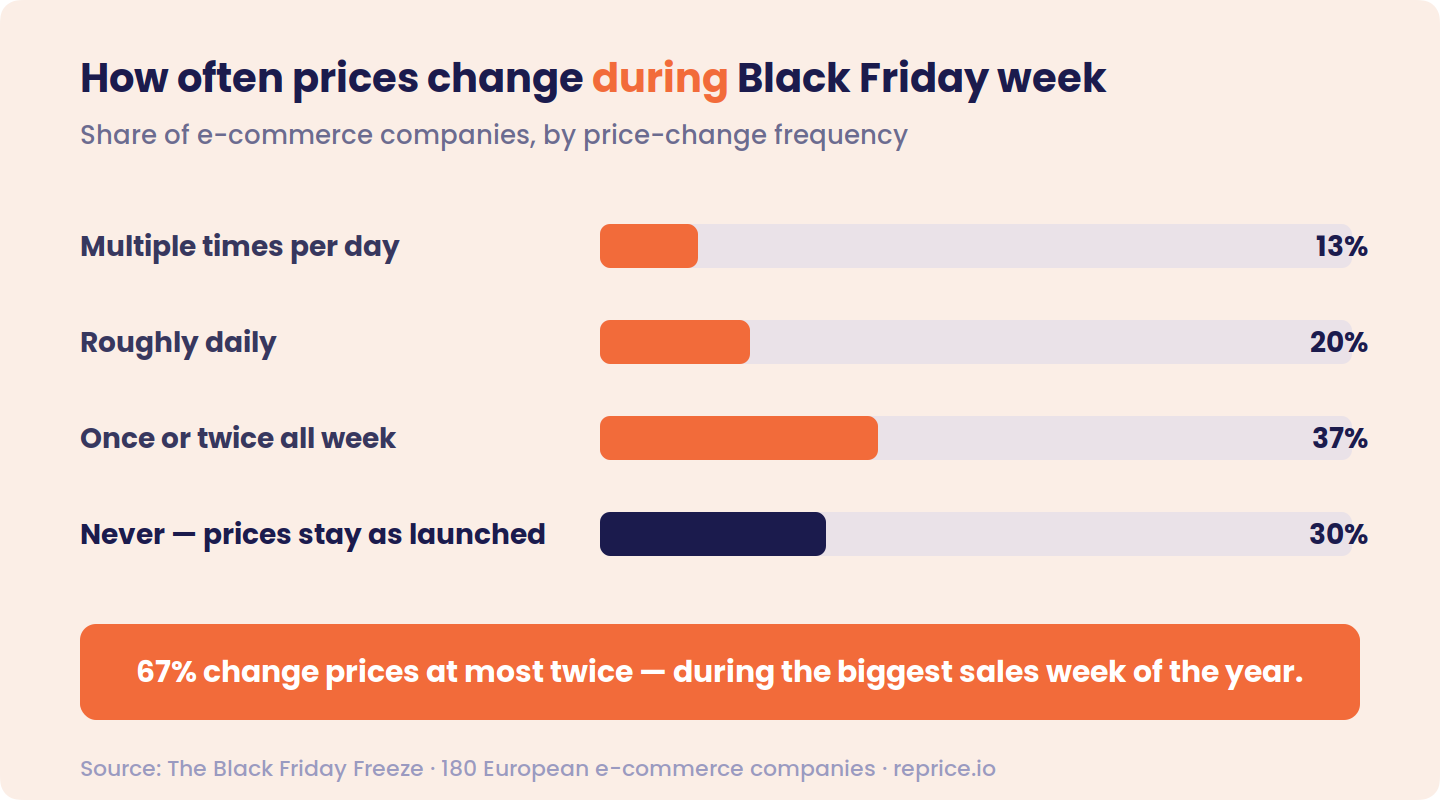
It isn't that they don't want to move. 53% say their prices are fully flexible, changeable any time. The behaviour says otherwise, because 74% run into a wall when they try. It's too manual (23%). It's locked by internal policy (20%). There's no data to decide on (18%). Or there's no time, because the team is already flat out (13%).
And the freeze is bigger than the campaign.
When everyone's watching the discounted products, the rest of the range, usually most of it, stops being priced at all.
The 30-day rule is simple: an advertised discount has to be measured against the lowest price from the last 30 days.
We asked what actually happened at companies before a Black Friday. 80% owned up to at least one thing a regulator would question.
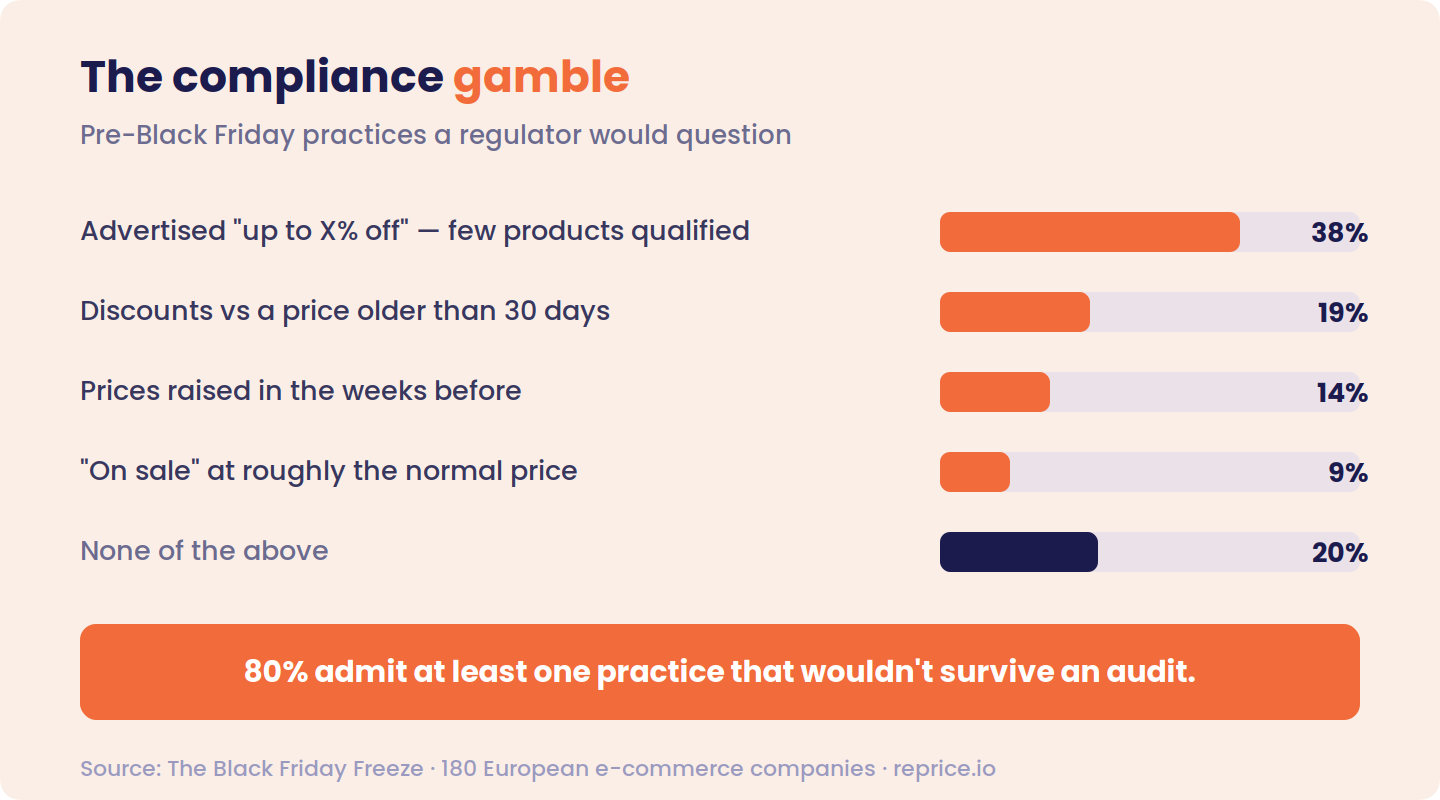
Almost none of it is deliberate.
It's what happens when you calculate discounts in a spreadsheet, against whatever reference price was at hand, across thousands of products, the week before launch.
Nobody checks the 30-day history of 3,000 SKUs by hand.
But the exposure is real. Breaking price-marking rules can mean fines of up to 4% of parent-company revenue.
That's not a spreadsheet problem any more.
That's a board problem.
The freeze, the compliance risk, the slow reactions look like separate issues. But they're actually the same problem wearing three faces because the data lives in one place, and the decisions live in another.
38% still run Black Friday in spreadsheets or change prices one product at a time.
The failure mode never changes:
One person holds the whole thing in their head, and that person is busier than they'll be all year.
The teams that don't freeze didn't hire more people.
They stopped moving data between tools.
Competitive pricing and discount campaigns run from the same place, so a price change is a click, not a project. That's what Reprice is for, and it's the exact gap this research kept turning up.
We surveyed 180 European e-commerce companies to find out how they plan, run and adjust Black Friday pricing
Data: Survey of 180 European e-commerce companies. All respondents are leaders involved in price strategy and price optimization at companies that run Black Friday campaigns.