

You check the price of one of your best-selling products and discover that a competitor is now selling it for €4 less. Should you match their price immediately, or wait? Respond too slowly and you could lose sales. But match every lower price and you risk giving away margin unnecessarily.
Not every competitor price change requires a response. The challenge is knowing when to change your price and being able to act quickly when you need to.
Here's how.
Competitive pricing, discount campaigns and insights in one system.
We asked 180 European e-commerce companies how fast they could react if a competitor undercut a key product.
Only 18% could respond within the hour. 45% would catch it the same day. The remaining 36% would need one to two days, or wouldn't notice at all.
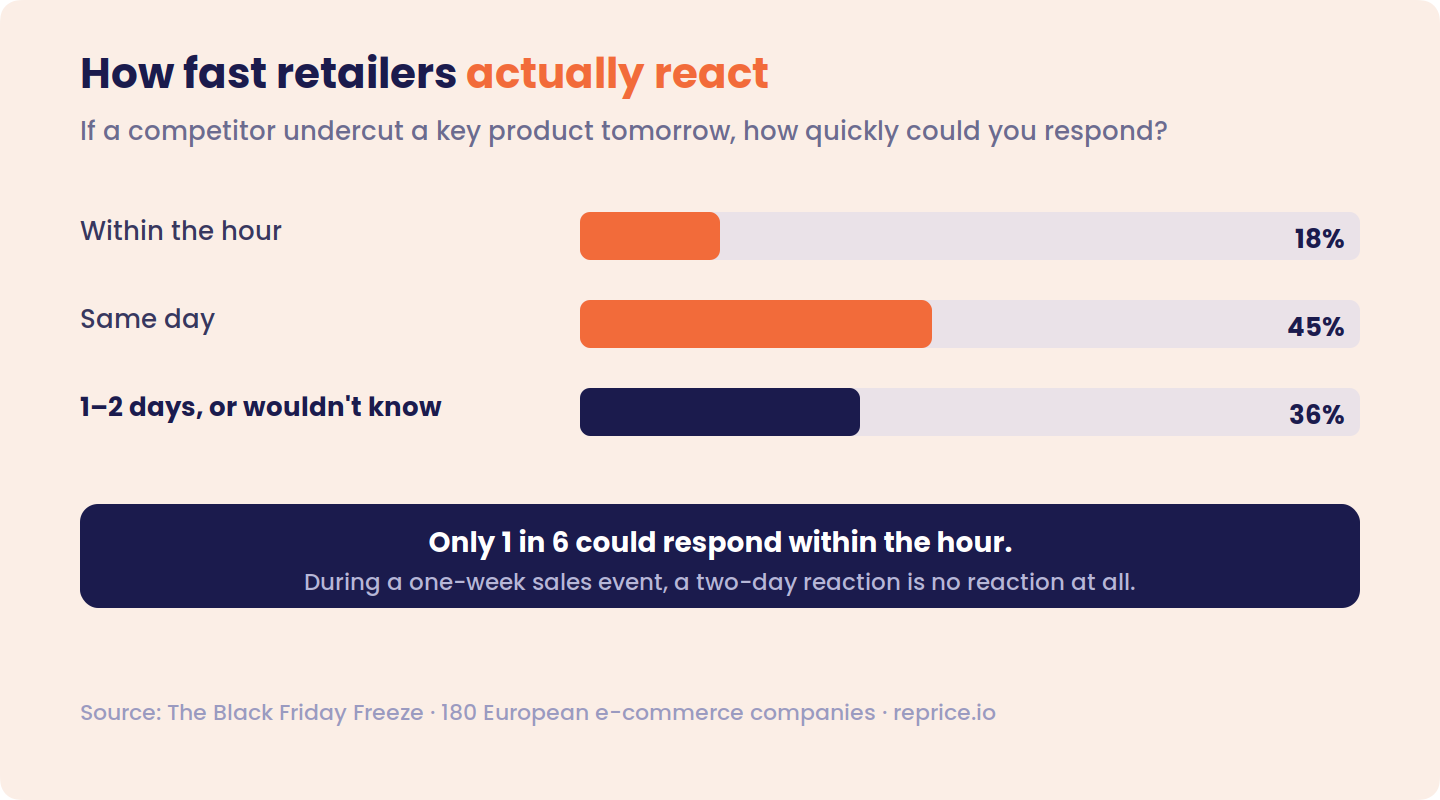
These findings come from our Black Friday Freeze report. During busy sales periods like Black Friday, the speed of your response matters.
When a competitor lowers their price on a product you both sell, you risk losing sales if your price stays higher.
This is especially important on product comparison sites where shoppers can easily compare offers from different retailers.
The longer it takes you to respond, the more potential sales you could lose. During busy periods like Black Friday, even a delay of a day or two can make a difference.
Responding quickly to a competitor's price change is important. But that doesn't mean you should match every lower price.
Before changing your price, there are a few things to consider.
Is the competitor in stock? Is the lower price a temporary promotion? Is this a competitor you actually want to match? And most importantly, can you match their price without going below your minimum margin?
For example, a competitor might offer a very low price for just one day. If you automatically match that price, you could give away margin unnecessarily.
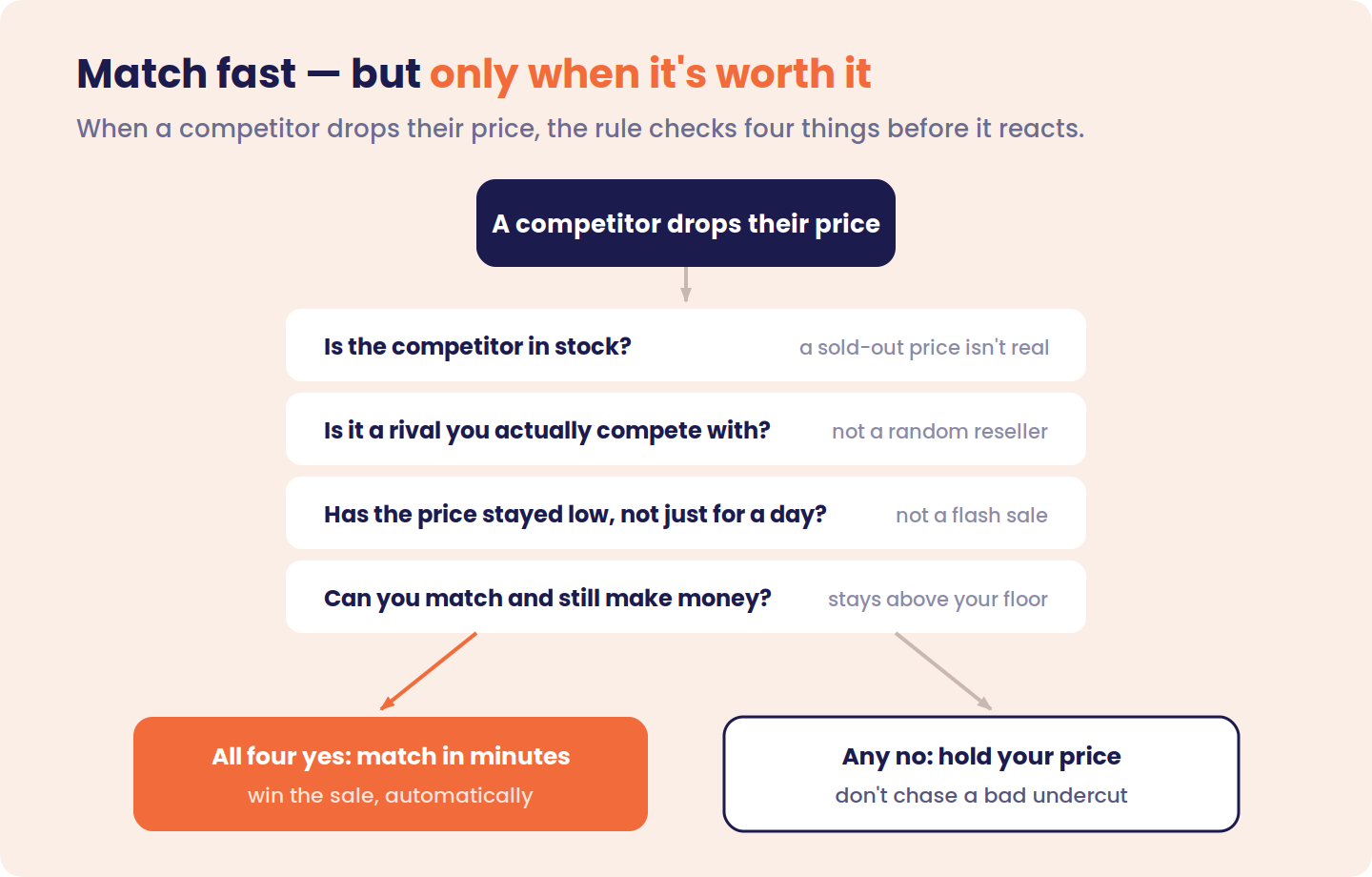
The challenge is making these decisions quickly, especially when you're managing hundreds or thousands of products.
Pricing rules let you decide in advance how your prices should respond when competitors change theirs.
You set the logic once: match these competitors, on these products, down to this floor, and ignore out-of-stock and untracked sellers. Then the system watches all the time and acts the moment a real undercut appears.
That's what Reprice does.
Reprice monitors the competitors you choose and can automatically adjust your prices based on your rules, without going below the margin floor you've set.
This means you don't have to review every competitor price change manually. You can respond faster while keeping control over your pricing decisions.
Competitive pricing, discount campaigns and insights in one system.
Data: The Black Friday Freeze, a survey of 180 European e-commerce companies.